

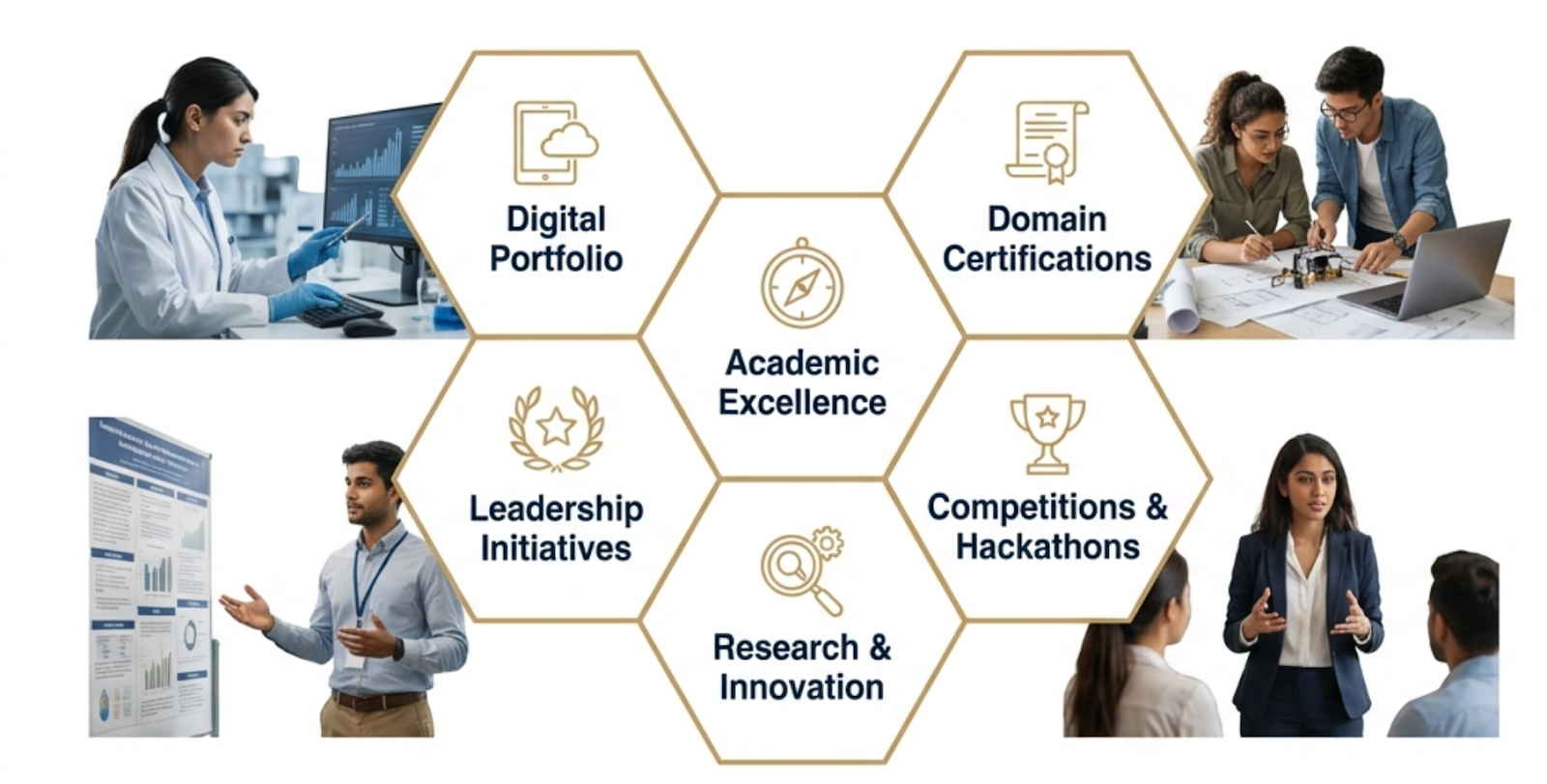
From Average Student to Standout
How Olympiads, Research & Projects Build the Profile That Opens Every Door
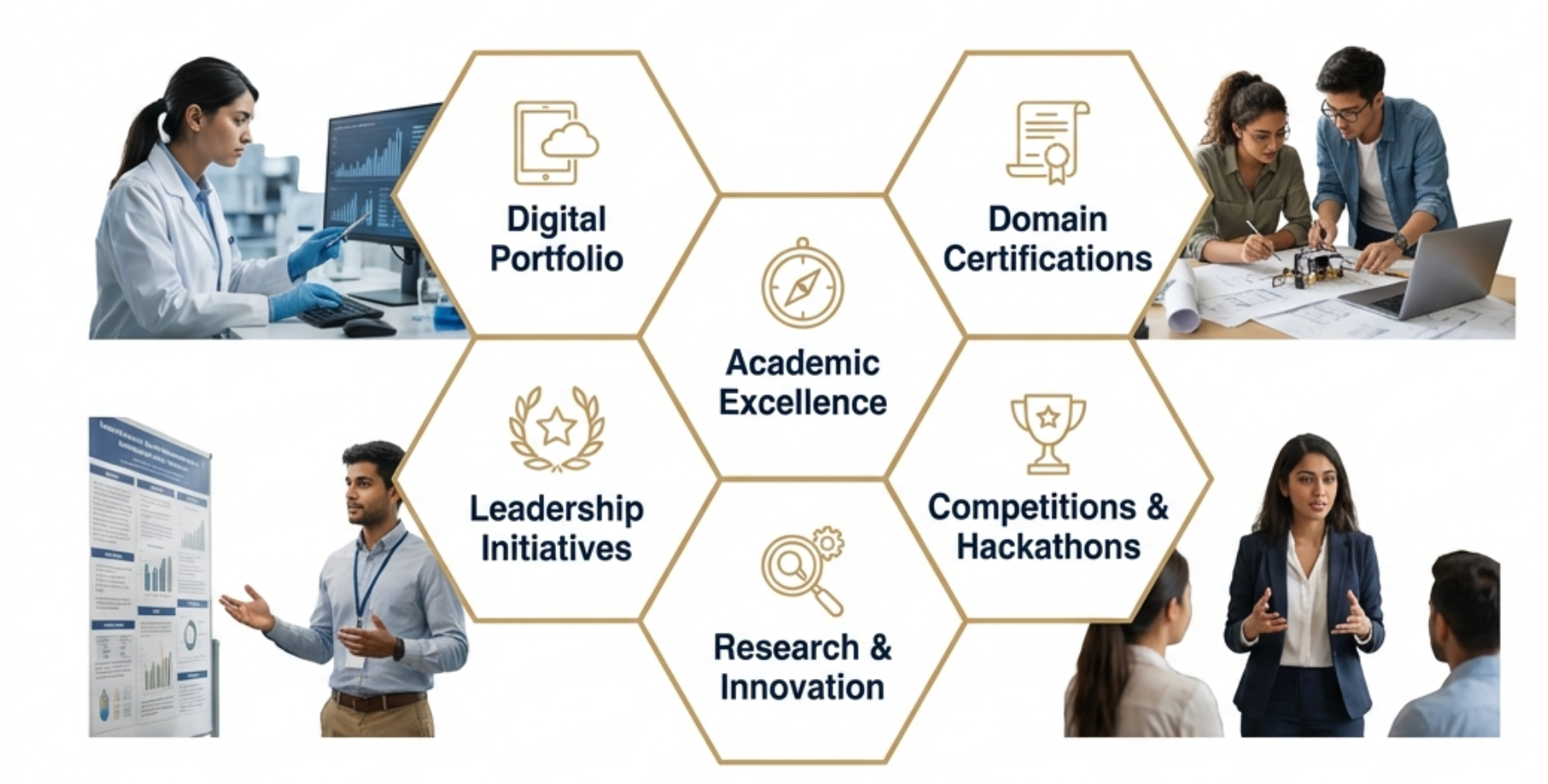

Why Grades Alone Are No Longer Enough
Here is a conversation happening in admissions offices at top universities around the world right now: "We have 500 applicants with a 95% average. What makes this one different?"
Grades matter. But they are table stakes — the minimum, not the differentiator. What truly sets a student apart is evidence of who they are beyond the classroom: how they think, what they pursue, and how far they are willing to push themselves.
This is where Olympiads, independent research, and purposeful projects become the most powerful tools in a student's arsenal — and why parents who understand this early give their children an extraordinary advantage.
|
"You can't go back and change the beginning, but you can start where you are and change the ending." — C.S. Lewis |
The Three Pillars of a Standout Academic Profile
Pillar 1 — Olympiad Achievement
Olympiads are the clearest, most internationally recognised signal of academic depth. They tell a university or employer one thing immediately: this student doesn't just know the content — they can apply it under pressure, in ways most of their peers cannot.
What Olympiad participation signals to the world:
- ● Intellectual ambition — you sought challenge beyond the standard syllabus
- ● Consistency — you trained and prepared over months and years, not days
- ● Resilience — you competed, possibly failed, and came back stronger
- ● Specialisation — you went deep into a subject, not just wide
|
📊 The Profile Impact of Olympiad Results School level: Establishes you as among the top performers in your cohort District/State: Signals genuine subject mastery — rare and valuable National level: Transforms your application — very few students reach this tier International: Places you in a global elite that every top university notices Tip: Even consistent participation over 3–4 years without a top medal demonstrates commitment that admissions panels respect. |
Pillar 2 — Independent Research & Projects
If Olympiads show that you can solve other people's problems brilliantly, research shows that you can identify and pursue your own. This distinction matters enormously — especially for universities that value intellectual initiative.
What counts as research and projects for your profile:
- ● A science investigation submitted to a school or regional science fair
- ● A self-directed math exploration or proof written up as a short paper
- ● An economics or business project that analyses a real-world problem
- ● A history or law essay entered into a national writing competition
- ● A coding project, app, or tool that solves a genuine problem
The key is not perfection — it is originality and follow-through. A student who pursued a question they genuinely cared about, documented their process, and produced something tangible has demonstrated exactly what great universities are looking for.
|
📌 For Parents: How to Encourage Research Without Forcing It Listen for the questions your child asks repeatedly — those are research topics waiting to happen. Connect them with a mentor: a teacher, university student, or professional in their area of interest who can guide a small project. Don't worry about publishing or winning. The process of doing the research is what builds the skill — and the story. |
Pillar 3 — Purposeful Extracurriculars
Not all extracurriculars are equal on a profile. What admissions panels look for is not the longest list of activities — it is depth, leadership, and coherence. Three or four activities pursued seriously over multiple years tell a far stronger story than ten activities joined and abandoned.
High-impact extracurriculars that complement an Olympiad-focused profile:
- ● Subject clubs with leadership roles — Math Society president, Science Club founder
- ● Peer tutoring or mentoring — teaching others deepens your own mastery
- ● Debate, Model UN, or public speaking — critical for any humanities or law track
- ● Coding competitions, hackathons, or startup challenges — ideal for STEM/business tracks
- ● Community projects with a measurable outcome — not just participation, but impact
|
"The expert in anything was once a beginner who refused to give up." — Helen Hayes |
Building the Profile Year by Year
A standout profile is never assembled at the last minute. It is built deliberately, one year at a time. Here is a simple framework:
- Grades 1–4: Build habits — curiosity, reading, puzzles, early competitions
- Grades 5–7: Enter subject Olympiads, start a first project, join one club
- Grades 8–9: Pursue at least one national-level competition, deepen a research interest
- Grade 10+: Consolidate the narrative — how do your Olympiads, projects, and activities tell one coherent story?
The student who has followed this path arrives at their university application with something most applicants do not: a genuine track record, not a hastily padded resume.
|
✅ Profile Checklist — What to Aim For by Grade 10 3+ years of consistent Olympiad participation in at least one subject At least one competition result at district level or above One independent research project or significant academic project A leadership role in at least one school activity A clear subject specialisation that runs through your profile like a thread A personal essay that connects all of it into a compelling, authentic story |
Your profile is your story. Start writing it with intention — today. 🎯